
Few ideas are as familiar in everyday life, and yet as philosophically difficult, as luck. We speak of lucky breaks, bad luck, fortunate accidents, unlucky circumstances, and being in the right place at the right time. Luck appears to contradict our desire to believe that life is governed by effort, reason, and justice. If success is the result of hard work, what should we make of the person who succeeds largely because of an accident? If character matters, what should we say about someone whose character is admirable but whose life is devastated by events beyond their control?
The history of philosophy has repeatedly returned to these questions. From ancient Greek ideas of fortune to Machiavelli’s political fortuna, from existentialist/absurdist reflections on contingency and freedom to contemporary theories of moral luck and luck egalitarianism, philosophers have treated luck as one of the central challenges to human agency. A useful modern approach is neither to worship luck nor to deny it, but to recognize its power while concentrating on what remains within our control.

For the ancient Greeks, luck was often understood through the concept of tyche, usually translated as fortune or chance. Greek mythology personified Fortune as a goddess capable of abruptly changing human circumstances. This reflected a deep cultural awareness that human beings do not control the conditions into which they are born or the events that happen to them. Wealth, health, political success, family circumstances, and even survival could depend upon forces outside one’s control.

Aristotle gave one of the most influential philosophical treatments of fortune. In the Nicomachean Ethics, he argued that the good life consists fundamentally in human flourishing through the exercise of virtue. Yet he also recognized that external goods matter; poverty, illness, bereavement, political oppression, or other catastrophes can interfere with a person’s ability to flourish. Thus, virtue is necessary for a good life, but it cannot completely insulate someone from fortune.
Aristotle’s is significant because he rejects two extremes: the idea that we control everything important about our lives, and the idea that our choices do not matter.
The Stoics responded to the problem of fortune differently. Philosophers such as Epictetus, Seneca, and Marcus Aurelius emphasized the distinction between what is and is not within our control. Our judgments, intentions, and choices belong to us; other people’s actions, our social status, wealth, and ultimately the events of the external world do not. From this perspective, the wise person should not make happiness dependent upon circumstances that can be taken away by fortune.
This Stoic insight remains remarkably relevant. It does not require us to pretend that bad events are good or that suffering does not matter. Rather, it suggests that we should distinguish between an event and our response to it. Losing a job may be outside our control; how we respond to the loss is partly within it. Becoming ill may not be our choice; how we organize our lives around the illness may involve choice. Luck determines many of the conditions in which we act, but it does not necessarily determine the meaning we give to those conditions.
The Renaissance philosopher Niccolò Machiavelli offers a particularly interesting bridge between ancient ideas of fortune and modern ideas of agency. In The Prince, Machiavelli famously describes political life as a struggle between fortuna and virtù. Here virtù does not simply mean moral virtue in the Aristotelian sense. It refers more broadly to qualities such as energy, courage, judgment, adaptability, boldness, and practical ability. Fortuna, meanwhile, represents the unpredictable circumstances that can disrupt even the best-laid plans.
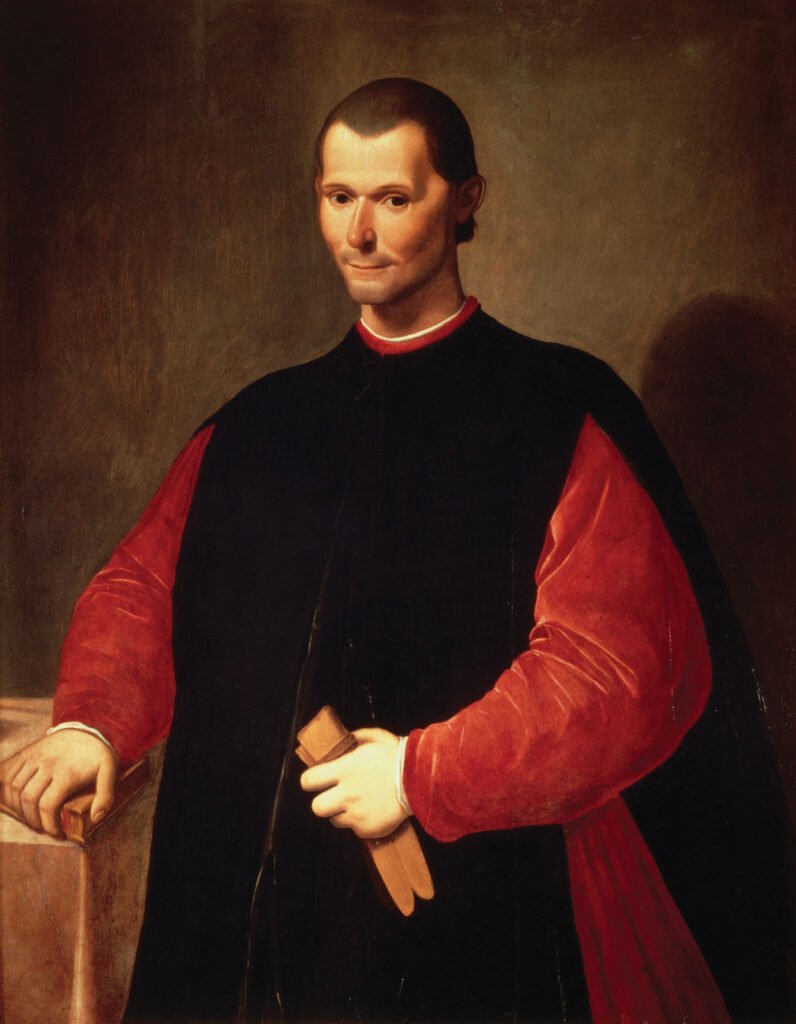
Machiavelli does not imagine that human beings can eliminate fortune. Instead, the capable person attempts to anticipate it, resist it, and take advantage of favorable circumstances. His famous metaphor compares fortune to a river that can flood and destroy the landscape unless people prepare for it in advance. The lesson is distinctly practical: although we cannot control chance, we can construct conditions that reduce its destructive effects.
Machiavelli therefore adds an important dimension to our understanding of luck. The appropriate response to uncertainty is not resignation. It is preparation. Luck may determine what opportunities appear, but human beings can influence whether they are prepared to recognize and exploit those opportunities. Prepare and adapt.
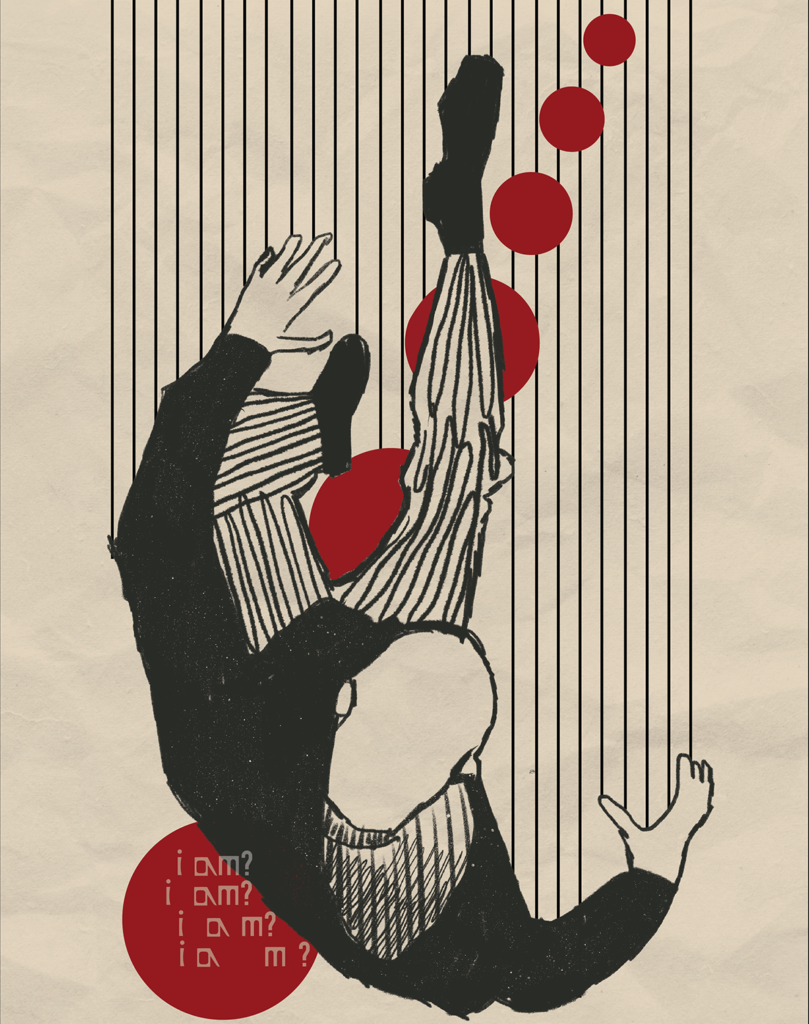
Existentialist philosophy pushes the problem of luck even further. French thinkers such as Jean-Paul Sartre, Simone de Beauvoir, and even the Absurdism of Albert Camus (it’s always the French… will we ever be free?… though I do like a good baguette, with Camembert!), emphasize the contingency of human existence. We do not choose to be born, choose our historical period, or determine all the circumstances that shape our lives.
Yet we make choices within those circumstances.
For Sartre, this creates a tension between what he called facticity – the concrete facts of our existence – and our freedom to respond to those facts. I do not choose my past, birthplace (or circumstances), body, or many of the circumstances surrounding me. Nevertheless, I remain responsible for how I conduct myself within those circumstances. This does not mean that everyone has unlimited freedom. Rather, freedom exists within constraints.
My buddy Camus similarly begins with a world that does not necessarily provide human beings with the meaning or order they desire. His response is not to surrender to meaninglessness but to live consciously and actively despite uncertainty.
Existentialism and Absurdism therefore offer another way of incorporating luck into life: we should acknowledge that our existence contains arbitrary and uncontrollable elements without allowing contingency to become an excuse for abandoning agency, which differs from a simplistic version of the Stoic approach. Existentialism and Absurdism place greater emphasis on the fact that there may be no predetermined meaning behind what happens to us. The task is therefore not simply to accept fortune but to create meaning through our choices.
Modern philosophy has complicated the picture further by examining how deeply luck penetrates human responsibility itself. One of the most important contemporary ideas is the concept of “moral luck,” associated particularly with philosophers Bernard Williams and Thomas Nagel.
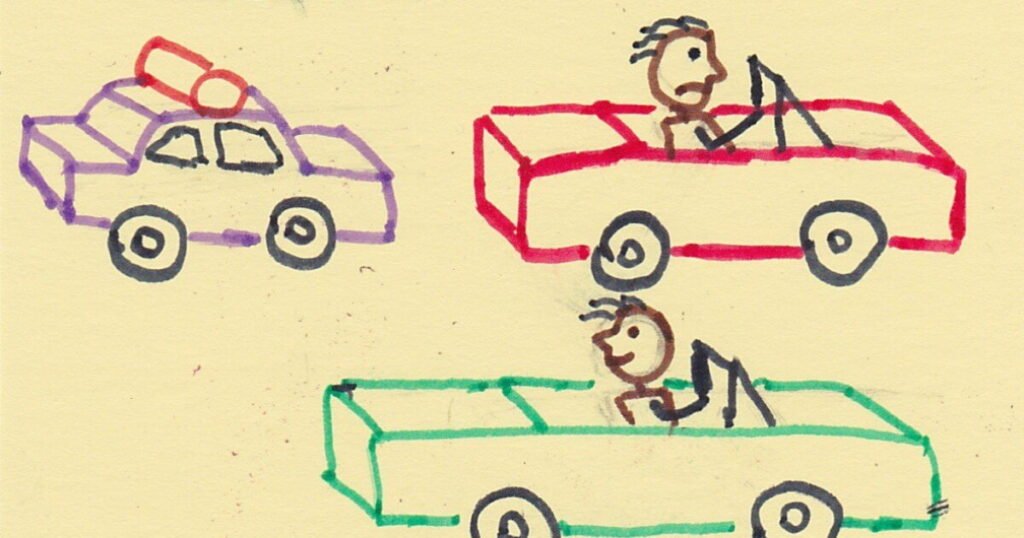
Moral luck arises when factors outside a person’s control nevertheless influence how we morally judge them. Consider two drivers who are equally careless. One happens to hit and kill a pedestrian; the other does not. Their intentions and degree of carelessness may be identical, yet society is likely to judge the first person more severely because of the accidental outcome. The difference is partly luck.
Similar problems arise with circumstances of birth, social environment, inherited abilities, opportunities, and historical conditions. A person’s achievements may depend not only on effort and character but also on advantages they never chose.
This observation challenges the comforting modern belief that people simply “make their own luck.” Hard work clearly matters, but opportunities are unevenly distributed, and chance can dramatically alter outcomes. Two equally capable people can make similar decisions and experience radically different results. One meets an influential mentor by chance; another does not. One entrepreneurial idea happens to coincide with a technological change; another arrives at the wrong moment.
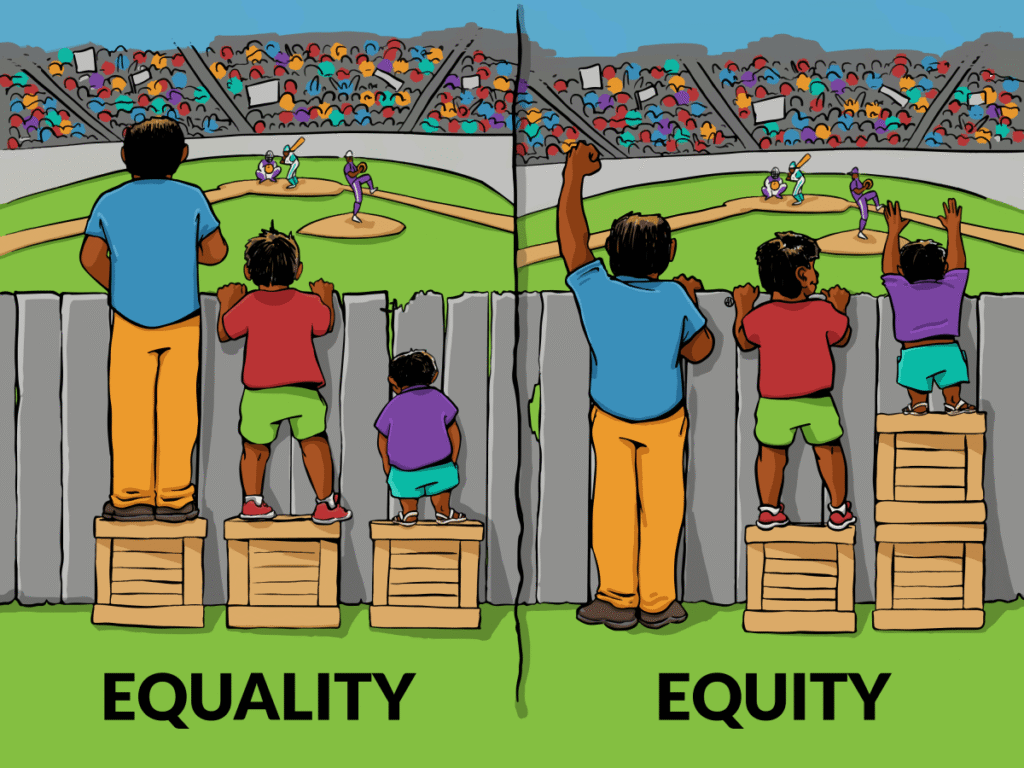
These questions become political when we turn to “luck egalitarianism,” a contemporary theory in political philosophy associated with thinkers such as Ronald Dworkin and later developed in different forms by G. A. Cohen, Richard Arneson, and others. It’s at the heart of the debate over “DEI.”

Luck egalitarianism begins from the observation that many inequalities result from circumstances for which individuals cannot reasonably be held responsible. People do not choose their parents, genetic inheritance, childhood environment, natural talents, or the historical period into which they are born. If these forms of unchosen luck have major effects on people’s opportunities, then simply attributing economic outcomes to individual effort (the “merit” argument) may be misleading.
A central distinction in luck egalitarian thought is between circumstances beyond a person’s control and choices for which a person can reasonably be held responsible. The theory therefore asks whether inequalities arise from “brute luck” or from voluntary decisions, which are referred to as “option luck” and include things like gambling, speculative investments, and dangerous hobbies. Someone who suffers because of an unavoidable circumstance may appear to have a different claim to social assistance from someone who knowingly accepts a risk and experiences its consequences.
However, luck egalitarianism is itself controversial. Critics argue that the distinction between choice and circumstance is often impossible to draw cleanly. Choices are made against backgrounds shaped by upbringing, education, social pressure, personality, and opportunity – all of which are themselves influenced by luck. There is also a concern that an excessively strict version of the theory could become harsh toward people who make imprudent choices. These debates demonstrate that acknowledging luck does not automatically tell us how society should respond to it.
Nevertheless, luck egalitarianism makes an important contribution: it forces us to ask how much of inequality is genuinely attributable to individual choice and how much reflects circumstances that people never selected.

The preceding and admittedly cursory philosophical history of luck leaves us, thoughtful reader, with one question: how should we live with luck? Based on it, I would like to suggest several principles for modern life, principles my Chihuahua Gordon (left) fully endorses (he’d endorse clubbing baby seals if it got him a treat!).
First, we should cultivate “epistemic humility.” Success should not automatically be interpreted as proof of superior character, just as failure should not automatically be interpreted as evidence of laziness or incompetence. Luck is often invisible precisely because successful outcomes make our decisions appear more inevitable than they really were.
Second, recognizing luck should encourage “gratitude.” Many of the most important advantages in life – being born into a particular family, encountering particular teachers, meeting particular friends, enjoying periods of good health, or simply surviving dangerous events – are not entirely achievements. Gratitude is therefore not merely an emotional virtue; it is an intellectually honest response to contingency.
Third, awareness of luck should encourage “resilience without illusion.” We should plan carefully, work diligently, save money, develop skills, maintain relationships, and make prudent decisions. These actions improve our prospects, but they do not guarantee outcomes. Machiavelli’s virtù reminds us to prepare for fortune; the Stoics remind us not to confuse external outcomes with our worth; the existentialists and absurdists remind us that we remain responsible for choosing how to live within circumstances we did not create.
Finally, an awareness of luck should influence how we think about other people and about society. If chance contributes substantially to both success and failure, compassion becomes more reasonable and arrogance less so. Someone struggling may have encountered obstacles invisible to us, while someone thriving may have benefited from opportunities they did not create. This does not eliminate personal responsibility, but it places responsibility within a broader context. Luck egalitarianism turns this observation into a question of justice: what should society do when people’s prospects are shaped by circumstances over which they have little or no control?
The philosophical history of luck ultimately reveals something uncomfortable but liberating: human beings are neither completely masters of their fate nor helpless victims of chance. Aristotle reminds us that flourishing requires both virtue and favorable circumstances. The Stoics remind us to concentrate on our own judgments and choices. Machiavelli emphasizes preparation and adaptability in the face of fortuna. Existentialism and Absurdism emphasize freedom and responsibility within conditions we did not choose. The 5th century Roman senator, philosopher, and Christian theologian Boethius, who wrote De consolatione philosophiae (the “Consolation of Philosophy”), warns against placing our happiness in unstable external goods, while contemporary philosophers turn our attention to how deeply luck (circumstances) can penetrate responsibility and social inequality – a question at the heart of the modern push for diversity, equity, and inclusion (DEI).
I ask the question “how does luck work?” because I have been very lucky in my life. Born unwanted to an unwed mother, I was adopted into a loving, well-off family; struck by a car at the age of 8, I survived when my friend literally sitting next to me eating his sandwich was killed by the same 1964 Chevy Nova that jumped a curb and ran us over; hired by a television postproduction studio and put “in charge” of a new computer system nobody (including me, at the time) understood, I turned being put in charge of the computers into a 17-year career; stricken with HIV a year after science developed medicines to treat it effectively, I survived the plague after it had killed so many of my friends (and sexual partners); and just this last year after receiving the devastating diagnosis of lung cancer, I underwent a recently-developed radiation treatment called Stereotactic Body Radiotherapy, or SBRT, which as of this writing appears to be working in reducing the size of my tumor and preventing the cancer from spreading (metastasizing) to other parts of my body.
That’s my “highlights reel” and everyday I wake up I realize it’s pretty amazing – it is a litany of luck. And so I wanted, indeed I need, to understand luck.
To that end, my attitude toward luck is therefore neither one of superstition nor denial. We should act as though our choices matter while remembering that outcomes are never entirely ours to command. Work hard, prepare intelligently, take worthwhile risks, and build habits that make good outcomes more likely. At the same time, recognize the role played by accident, circumstance, inheritance, timing, and opportunity. When fortune is favorable, gratitude is more appropriate than arrogance. When fortune is unfavorable, resilience is more useful than self-condemnation. And when considering the fortunes of others, humility and compassion are more rational than assuming that every outcome perfectly reflects individual merit.

Luck is not an alternative to human agency. It is the condition within which human agency operates. We cannot choose the cards we are initially dealt, nor can we control every turn of the game. But we can influence how we play, how we prepare for uncertainty, how we respond when circumstances change, and how we treat those whose luck has differed from our own. A mature philosophy of life therefore does not promise control over fortune, but it acknowledges that fortune will always have a hand in the outcome.
