
I really struggled with whether to write this post. And the jury is still out. I may get to the end, review it for grammatical structure and readability, tighten punctuation, and then delete the whole thing. I’ve done that before. Sometimes I write to process feelings, but that is best done in my journal, which is private, not by publishing on the Internet for the world to read.
But there are some subjects that gnaw at me. They demand I say something – public – and they pester me until I do. Sexual abuse is one.
Over the last couple of years, stories in the news about sexual abuse and abusers have become less triggering for me, thanks to the help of a gifted psychotherapist, Dr. David Wolgin, and my attorneys – Kathy Freberg, Ed Ross, Steve Rubino, and Rachel Steamer – who litigated my case and negotiated a financial settlement with my abuser’s (a Catholic priest) diocese and religious order, which brought some semblance of justice. I would have preferred to see him behind bars, but the statute of limitations had run out before this came before the courts; I support changing the law as regards this loophole for perpetrators – sex crimes, especially those committed against minors, should be treated like murder, which has no statute of limitations.
And yet, the seismic news out of Great Britain yesterday that a beloved television star, comic writer, and children’s book author named David Walliams had been using his fame, power, and position of trust to prey on teenaged girls for sex really shook me, coming as it did on the heels of Russell Brand being convicted for rape and sexual assault, but also because in the allegations levelled against Walliams I recognized the playbook of my own abuser.
According to a joint investigation by The Guardian and ITV News published yesterday, a woman identified under the pseudonym “Alex” alleges that David Walliams groomed her after they first met at a Little Britain (Walliams’ show) fan event in London in January of 2004. She was 15. He was 32.
Alex says that Walliams initially offered to help her pursue her ambition of becoming a comedy writer, subsequently maintaining contact with her through telephone calls and emails, but when she was 17, he began requesting increasingly explicit photographs, including nude images. She says they subsequently had consensual sexual encounters when she was 17 and 18, but that she felt pressured, lacked control over the situation, and was exploited because of his celebrity status and position of influence.
Change the names, the sexuality, and a few specifics and her story is mine. I wanted to be a priest, not write comedy, and my abuser was a priest who promised to help me achieve my goal. He befriended me, gave me gifts, and ingratiated himself with my family, at a time – I was 16 – when sex and sexuality were a big question mark for me.
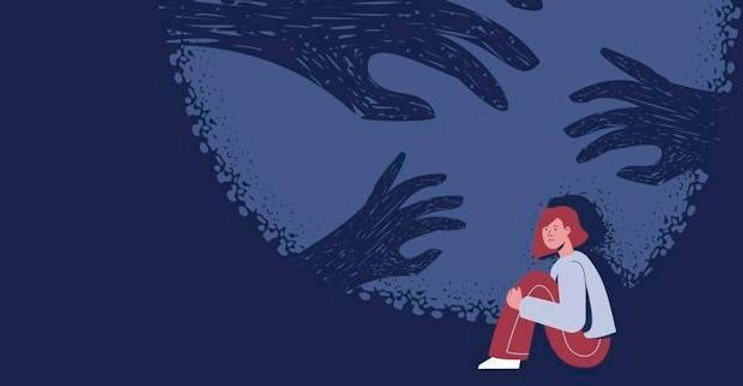
But I would ask you, thoughtful reader, to look beyond sex and sexuality to the “process” of sexual abuse – what we call grooming. I think most people focus on the salacious details of the act itself; that is horrific, it can’t be denied. But what leads up to it – friendship forming, trust being built, defenses coming down, expectations set – when all of this is flushed down the toilet by the coup de grâce the damage to the victim sets in.
Grooming involves a gradual process of building trust, creating emotional dependency, manipulating boundaries, and exploiting a young person’s vulnerability. The abuser initially appears caring, supportive, or protective. And then when his true intentions manifest, the psychological and emotional maelstrom is overwhelming. A teenager may:
- Develop an emotional attachment to the adult and believe they are in a special relationship
- Feel responsible for protecting the adult or keeping the relationship secret
- Believe they consented to behavior they were gradually manipulated into accepting
- Experience conflicting feelings of affection, loyalty, fear, and resentment
- Struggle to recognize that they were being exploited
- Feel betrayed when they eventually understand the adult’s intentions
- Blame themselves for not recognizing or resisting the manipulation
When the perpetrator is significantly older, famous, wealthy, or professionally influential, this further complicates the experience. The teenager may feel unable to challenge or refuse the adult because of the built-in power imbalance. Moreover, the adult has considerably greater life experience and understands the implications of the relationship; the teenager does not because of his (or her) literal immaturity.
But perhaps most damaging of all is what I will call “the fear of consequences.” At a time when life is all about what comes next, a teenager subjected to sexual grooming now has to worry about losing opportunities, damaging the adult’s reputation, or not being believed. It is an extremely heavy burden to carry at a time when your biggest concern should be pimples, or Mr. Reilly’s History midterm.
As one of the settling plaintiffs in the California Judicial Council Coordinated Proceeding No. 4286, referred to as “The Clergy Cases I,” I often found myself explaining that a teenager’s apparent willingness to participate in sexual activity does not necessarily mean that an adult has not groomed or exploited them. Grooming can involve manipulating a young person’s emotions, expectations, and understanding of relationships to make sexual exploitation possible.
My central point is this: sexual grooming is not simply about the sexual activity itself. It can involve a sustained manipulation of a young person’s trust, emotional development, sense of identity, and understanding of relationships. The psychological consequences may therefore be considerably more extensive than the immediate sexual experience.
But I want to point out, emphatically, sexual abuse does not inevitably result in lifelong psychological damage. In time, many survivors recover and develop fulfilling relationships and lives, particularly when they receive appropriate support.
That last point is key. Appropriate support. I won’t ever meet “Alex” who has bravely come forward and accused an adult David Walliams of grooming a teenaged her to fulfill his sexual desires; we won’t meet up for coffee and swap war stories. She doesn’t even know I exist; I only know of her because of the Internet. But I felt compelled to write this morning in solidarity with her and with all victims, and I hope that in doing so I have contributed to a better understanding of safeguarding children and teens from sexual predators.
