
Gay men today rely less on specialized vocabulary than even when I came out 40+ years ago. Some of my early mentors taught me phrases like “friend of Dorothy” and “light in his loafers” to refer to myself and my kind. But these American gay-isms had their origin in the sophisticated and extensive lengths to which homosexuals in Britain, especially in London during the 19th and 20th centuries, went to hide and communicate in plain sight. Living in a society in which homosexual behavior could result in arrest, imprisonment, social ruin, or violence, gay men needed a means of recognizing one another, communicating discreetly, creating solidarity, and talking about sexuality in environments where speaking openly could be dangerous.
They found it in Polari.
Polari was an argot – a specialized style of speech with its own vocabulary. It was a shifting mixture of English and words borrowed or adapted from sources including Italian, Romani, Yiddish, Cockney rhyming slang, theatrical vocabulary, sailors’ speech, and other forms of British cant. It emerged from the intersection of several older traditions of British urban slang, though its roots are difficult to trace because it was an oral vocabulary rather than a standardized written language. Speakers learned words through conversation, performance, friendship, and subcultural networks, and the vocabulary changed constantly.
An important source was theatrical and circus culture. London had a long tradition of itinerant performers, actors, entertainers, and theatrical workers developing distinctive forms of slang. The word “Polari” itself is generally connected to parlare, from the Italian for “to speak.” In Britain, theatrical people encountered Italian-derived vocabulary partly through contact with continental performers and partly through established traditions of theatrical cant. Words from this milieu entered broader forms of London slang.
Another source was sailors. London was one of the world’s great ports, and places such as the East End, Soho, and areas around the Thames brought together sailors, prostitutes, entertainers, criminals, immigrants, and other transient populations. Their vocabularies overlapped. Polari consequently cannot be understood simply as something “invented by gay men.” It grew from a much larger ecosystem of occupational and marginal slang, which homosexual men subsequently adopted, modified, and made particularly useful for their own purposes.
The social circumstances in which Polari flourished are essential to understanding its function. For much of British history, male homosexual behavior was subject to severe legal and social penalties. In England and Wales, sexual acts between men could constitute criminal offenses, and the legal system continued to prosecute men for homosexual behavior well into the 20th century. The Labouchere Amendment of 1885, for example, made “gross indecency” between men a criminal offense even when the conduct did not include the more narrowly defined act of sodomy (which had taken its name, inaccurately as it turns out, from the Biblical story of Sodom and Gomorrah found at Genesis 19). The law consequently extended considerably beyond sexual acts committed in public or involving penetration.
With Labouchere came prosecutions, police surveillance, blackmail, dismissal from employment, and social ostracism. The famous prosecutions of figures such as Oscar Wilde and Alan Turing demonstrated the extreme and barbaric consequences that homosexual men could face. Later cases involving public figures reinforced the message that homosexuality could threaten a person’s career and social standing.
And even their life.
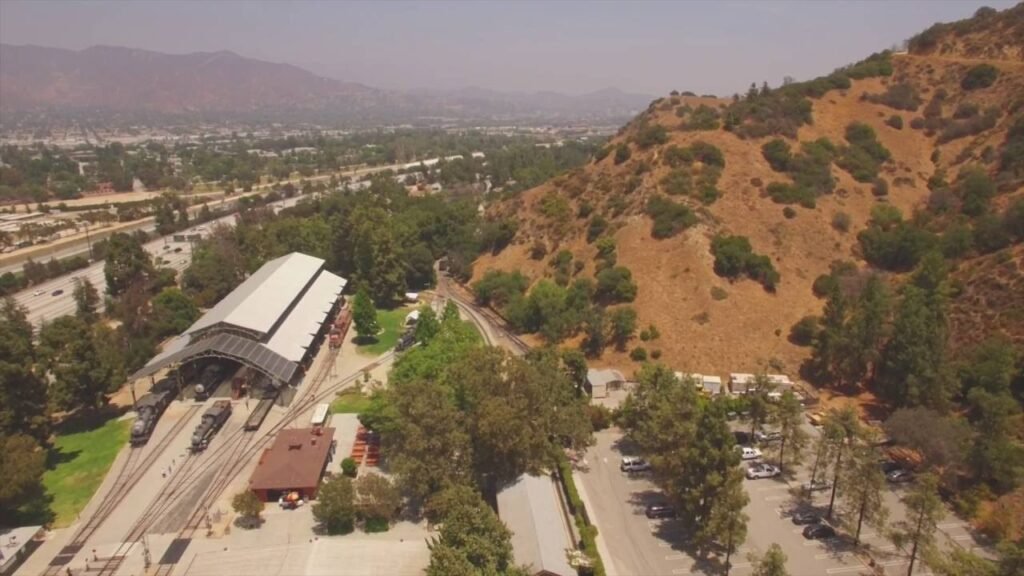
This environment produced a necessary-for-survival underground homosexual culture, commonly referred to – in England and America – as “the closet.” Gay men nevertheless met one another in a variety of venues, such as pubs (bars in America), clubs, theaters, public lavatories, cafés, private parties, and of course certain streets or parks (like Santa Monica Blvd. or Griffith Park by the Travel Town train museum in my native Los Angeles), but these networks had to operate within a society in which explicit identification could be risky. Language became one of the mechanisms through which this hidden social world functioned.
One of Polari’s most important uses was allowing people to identify others who belonged to, or were familiar with, the same subculture. A speaker could use an unusual word or phrase and observe whether another person understood it. This was particularly useful when two men encountered one another in a public environment in which directly asking about homosexuality might be dangerous or socially unacceptable. The linguistic mechanism resembles a password, although Polari was much more complicated than a secret code which might unlock entrance to a venue, a dalliance, or social inclusion. Someone who understood the vocabulary might demonstrate shared cultural knowledge without explicitly announcing his sexuality.
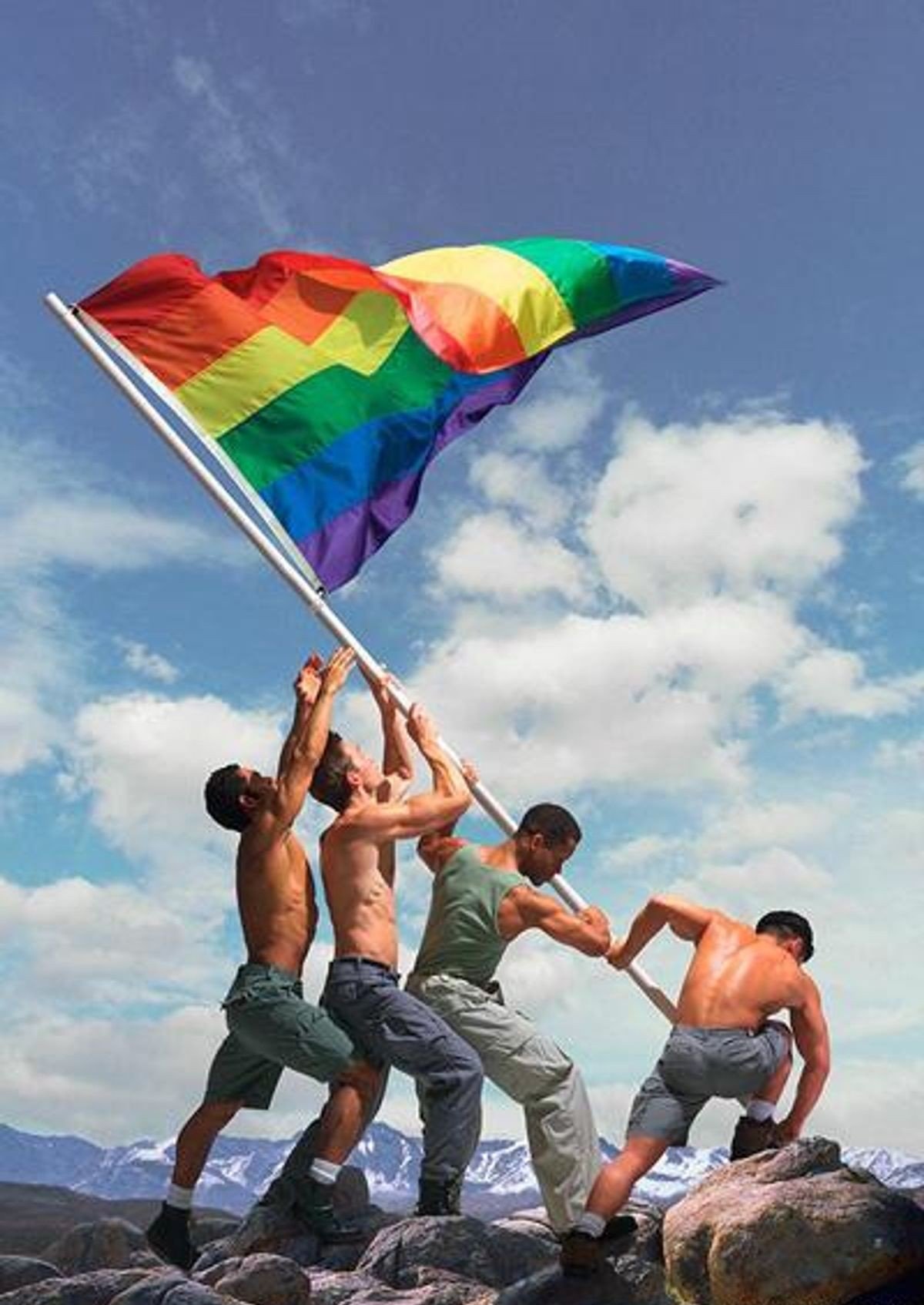
And that’s an important element because it could provide someone with a degree of plausible deniability. Likewise, it could identify what today we would call a friendly space (now, more often than not, marked with a Pride – rainbow – flag) or a heterosexual ally. Thus,
Are you one of us?
could become something closer to…
Do you understand the language of this particular social world?
Polari also provided linguistic camouflage, as with the title of this post. A speaker could discuss a person’s appearance, sexual interests, relationships, or social behavior while making the conversation substantially less intelligible to outsiders or eavesdroppers. This was especially useful in public where openly discussing homosexuality might attract unwanted attention.
By the way, the title is, roughly, “Look at that man, he’s a handsome gay!”
The vocabulary could turn potentially explicit statements into apparently nonsensical conversation. Someone unfamiliar with the argot might hear ordinary English punctuated by strange words without realizing that a sexually or socially meaningful conversation was taking place.
That capacity for concealment became especially important because gay men were forced to live simultaneously in two social worlds: the public world in which homosexuality might need to remain unspoken and a private subculture in which it could be acknowledged. In this regard, Polari was much more than a protective device. It was also a means of belonging.
Subcultures frequently develop distinctive vocabularies because shared language creates a sense of community. Polari allowed gay men to joke with one another, gossip, flirt, insult, compliment, and describe people and situations in ways that carried meanings recognizable to insiders. The language could therefore transform an otherwise threatening social environment into something more playful. This playfulness is one of Polari’s most distinctive characteristics. Words and expressions often had deliberately theatrical, exaggerated, or comic qualities. The vocabulary could make the act of speaking itself entertaining. A lot of what we call “camp” (on both sides of the Atlantic) originated and derives from this.
That humor should not be mistaken for evidence that the surrounding circumstances were anything short of treacherous. Indeed, humor can be a way of coping with vulnerability or extreme situations. In a society where homosexual men were frequently forced to conceal important parts of their lives, linguistic wit offered a means of exercising some control over how those lives were represented.
A few examples of Polari:
- bona — a good, attractive, or desirable homosexual
- vada — look or see
- omi — man
- palone — woman
- naff — sexually or socially undesirable
- zhoosh — to smarten or improve something
- dolly — attractive, pretty, or desirable
The meanings were not always fixed. Like slang generally, Polari depended heavily upon context, and words could shift meaning over time. Some words became mainstream: “naff,” for example, eventually became ordinary British English for “uncool” or “tacky,” while “zhoosh” made the transition along with its Polari meaning.
Polari’s association with the theater was particularly significant because theater offered one of the few environments in which unconventional sexuality and gender presentation could sometimes exist with relative visibility. The British stage had long contained traditions of camp performance, theatrical slang, cross-dressing, exaggerated gender roles, and performers whose social lives existed somewhat outside conventional respectability. The language therefore developed an association with camp, theatricality, wit, and performance.
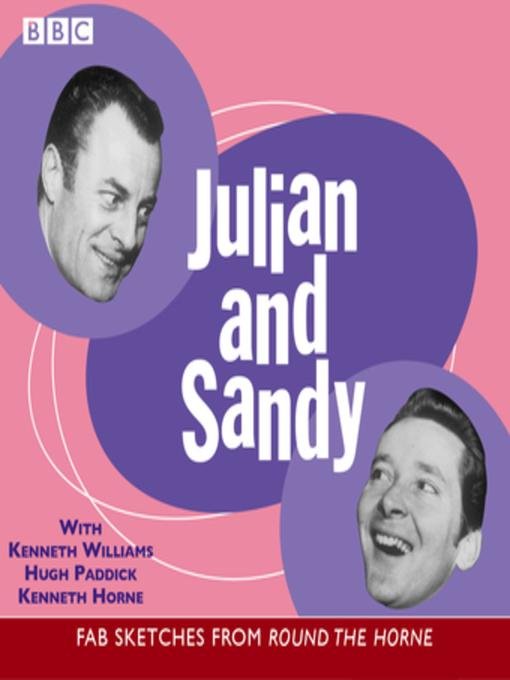
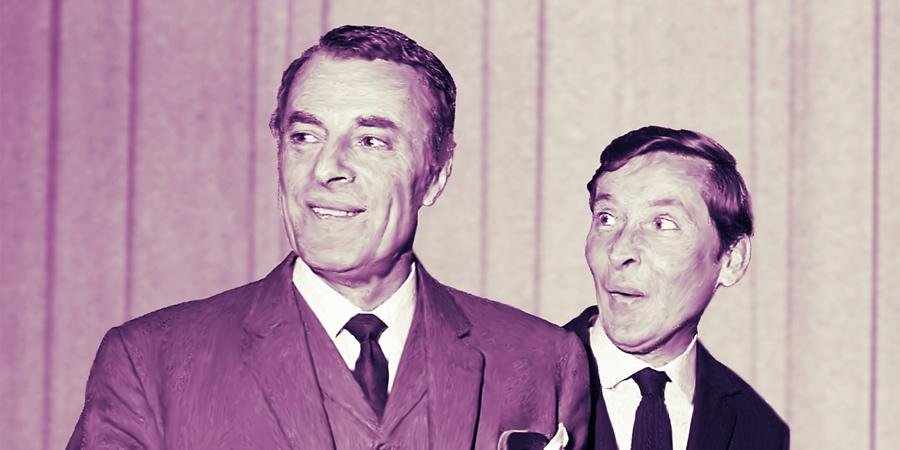
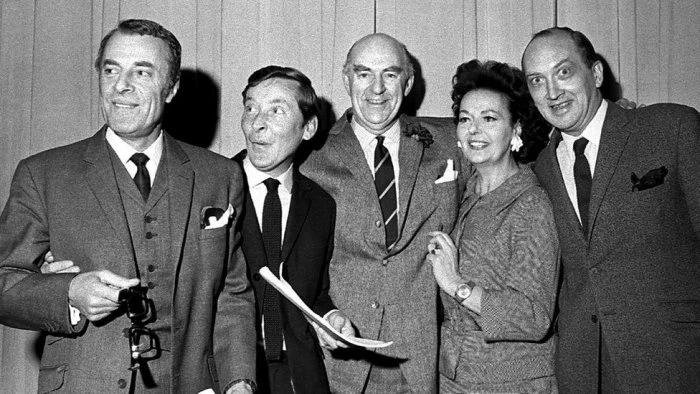
Perhaps the most well-known popularization of Polari came through the BBC radio comedy program Round the Horne, which ran during the 1960s. The characters Julian and Sandy, played by Kenneth Williams and Hugh Paddick, were camp theatrical men whose dialogue incorporated Polari.
This was historically remarkable. A vocabulary that had functioned partly as an insider’s language entered the living rooms of millions of British listeners.
The comedy depended on a fascinating double effect. Listeners who knew Polari could recognize the references immediately, while listeners who did not could still appreciate the flamboyant sound and comic performance.
The program turned a formerly subcultural linguistic practice into entertainment for a mass audience. But this mainstreaming also changed Polari’s function.
Once words became widely recognizable, they became less effective as secret language. A vocabulary designed to exclude outsiders could no longer perform that function if outsiders knew what the words meant. At the same time, mass broadcasting helped preserve Polari historically. Without Round the Horne, much of the vocabulary might have remained confined to oral usage and subsequently been lost as members of the communities using it died out.
By the late 20th century, many of Polari’s words had become recognizable pieces of British and cross-Atlantic slang. Meanwhile, the social circumstances that had made a secret gay argot necessary were changing. The Sexual Offences Act 1967 partially decriminalized homosexual acts between men in England and Wales under certain circumstances. It did not immediately produce equality or acceptance, and many forms of discrimination continued for decades, and continue today.
Nevertheless, the legal and cultural landscape was changing, particularly in the United States. The emergence of openly gay political organizations like the Mattachine Society (1950) and the Daughters of Bilitis (1955), publications (Mattachine Review, The Ladder), commercial venues (bars, restaurants, boutique hotels and resorts), and eventually the gay rights movements that were sparked by the Stonewall Riots in New York’s Greenwich Village created new possibilities for homosexual men to communicate openly rather than through coded language.
Polari did not disappear simply because homosexuality became legal. Its decline resulted from several overlapping societal changes from the mid-20th century onward. Most important among them, gay men began developing public identities and institutions; the emergence of gay liberation in the 1970s emphasized openness and political visibility. Harvey Milk’s famous catchphrase when fighting the Briggs Initiative in California – “come out, come out, wherever you are” – is a prime example. Polari as a coded vocabulary associated with secrecy and concealing one’s sexual proclivities could not really coexist with a movement the foundation of which insisted that homosexuality was a normal and naturally occurring variant of sexuality, and as such should not have to remain hidden.
There is consequently an interesting tension between Polari and the history of gay liberation.
On one hand, Polari represents adaptation to oppression. It demonstrates how a marginalized community created mechanisms for communication and mutual recognition despite legal and social restrictions. On the other hand, its very existence reveals how thoroughly homosexuality had been forced into secrecy. The necessity for a coded language was itself a consequence of a society in which openly acknowledging one’s sexuality could have serious consequences.
Polari therefore should not be romanticized as merely a colorful “secret language.” Its wit and inventiveness are culturally fascinating, but the historical circumstances that made such linguistic secrecy necessary were often harsh.
Today Polari is relegated to being a linguistic curiosity and a historical phenomenon; I have a thing for queer history – I have sat at the feet of my elders not because I have a thing for feet but because the stories they tell are my history; to understand who we are and where we are going, we must understand where we have been.
Polari’s importance lies in what it tells us about how marginalized communities create culture under constraint. As a community, homosexuals did not need formal institutions, newspapers, schools, or legal recognition to create a sophisticated social world; we constructed one through conversation.
Polari also demonstrates that language is not merely a mechanism for transmitting information. It can establish who belongs, who does not, and who can be trusted. A word can function simultaneously as a joke, an insult, a term of affection, a sexual innuendo, and a test of cultural knowledge.
Polari is ultimately the story of a community speaking between the lines.
It emerged from London’s heterogeneous world of theater, sailors, performers, immigrants, street culture, and occupational slang, but homosexual men made particularly extensive use of its vocabulary. In an era when male homosexuality could bring criminal prosecution, professional consequences, blackmail, and social exclusion, Polari offered ways to recognize insiders, discuss sexuality discreetly, gossip, flirt, insult, joke, and create a shared cultural identity.
Its greatest achievement was perhaps not secrecy but community. Polari allowed people to speak about a world that mainstream society refused to acknowledge openly. Its theatrical humor and extravagant vocabulary provided not merely concealment but a distinctive cultural voice. One hiding in plain sight!
The decline of Polari corresponds to homosexuality becoming increasingly visible, organized, and publicly discussed. The practical necessity for a secret gay argot has thankfully diminished, but that it existed at all tells of how we, as gay men, had to be simultaneously visible to one another and invisible to the wider society. Polari’s words are artifacts of that world, somewhat preserved in the camp banter of today, but they also testify to the creativity with which people constructed friendship, identity, humor, and solidarity under conditions of extreme social ostracization and criminalization.
