
How does a society come to accept, enable, or even celebrate a political leader whose behavior threatens the norms that are supposed to restrain power? This is a question we all should be asking – it is a far more interesting and important question than reciting the litany of Donald Trump’s “sins.” Remember when you sat through a lecture on Shakespeare in your sophomore English class and asked ‘When will I use this?’
Well, thoughtful reader, today is the day! So, close your eyes for a moment, hold an image of your high school English teacher in mind, and thank him or her.
Thank you Mr. Bowen. Okay, let’s get started…
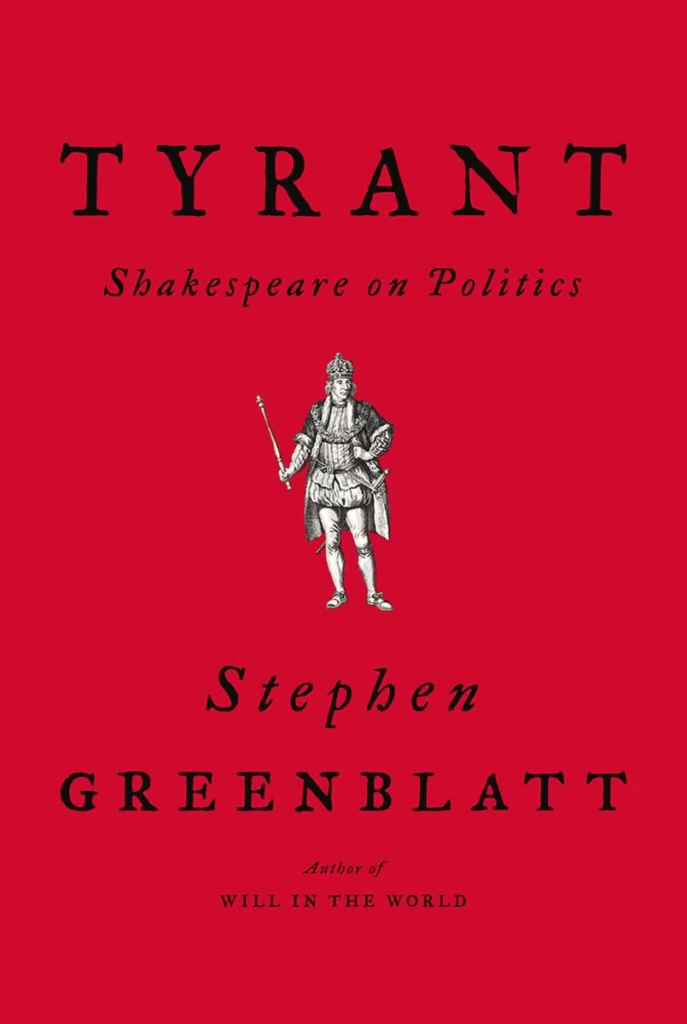
In Tyrant: Shakespeare on Politics, Stephen Greenblatt turns to Shakespeare who repeatedly examines the relationship between personal character and political power in his plays. Richard III, Macbeth, Coriolanus, Julius Caesar, and other figures are not simply villains placed against heroic opponents. They exist within political systems populated by courtiers, citizens, soldiers, aristocrats, family members, and institutional actors who make their rise possible. Greenblatt’s central concern is therefore not merely the tyrant himself but the ecosystem that permits tyrannical behavior to become politically effective.
This is where a smart and thoughtful reader, such as one who might also be a regular reader of this blog, will draw a comparison with Donald Trump. Trump is obviously not Richard III, and the United States is not Shakespeare’s England. Greenblatt himself avoids naming Trump directly inTyrant. The value of the comparison, then, does not lie in declaring Trump a Shakespearean tyrant but rather in asking whether some of the political mechanisms Shakespeare dramatizes can be observed in modern American politics.
One of Greenblatt’s most important observations is that political power can be built through the manipulation of resentment. Shakespeare’s demagogues understand that political anger can be transformed into loyalty. Jack Cade in Henry VI, Part 2, for example, constructs his authority by presenting himself as the champion of ordinary people against corrupt elites. The political appeal does not depend primarily upon a detailed governing program. It depends upon the creation of an emotional division between “the people” and an allegedly corrupt establishment.
The resemblance to Trump’s political rhetoric is striking. Trump’s campaigns have repeatedly constructed a political conflict between ordinary Americans and a collection of institutions and elites – politicians, bureaucrats, journalists, experts, universities, judges, and other establishment figures. His political vocabulary frequently turns disagreement into a struggle between an authentic popular constituency and institutions portrayed as corrupt or hostile to that constituency. This does not mean that the grievances themselves are imaginary; rather, Greenblatt’s Shakespearean framework demonstrates how political leaders organize genuine grievances into a personal relationship between leader and followers.
That personal relationship is another important feature of Greenblatt’s analysis. Shakespeare’s political world is full of rulers who encourage people to identify political loyalty with loyalty to the ruler himself. Political institutions become secondary to personal allegiance. The ruler’s enemies consequently become enemies of the community, while criticism of the ruler can be represented as betrayal.
This aspect of Shakespeare’s political imagination has an obvious contemporary resonance. Trump’s political movement has often been unusually personal in its attachment to him. His continuing influence within the Republican Party, including after his first presidency and following his return to office in 2025, demonstrates the political significance of that personal bond. Contemporary reporting also provides examples of Trump’s willingness to attack institutions or officials – including judges and even Supreme Court justices he appointed – when their decisions conflict with his objectives. Just last Tuesday, for example, Trump publicly criticized Supreme Court justices after the Court blocked a postal-ballot rule his administration had supported, while praising the two justices who dissented.
This is particularly relevant to Greenblatt because Shakespeare repeatedly shows the danger of personalizing political conflict. Once political disagreement becomes a contest between loyalty and betrayal, institutional independence becomes difficult to maintain. A judge who rules against the king is no longer simply performing a constitutional function; from the ruler’s perspective, the judge can become an enemy. A newspaper that criticizes the ruler becomes not an independent participant in public debate but an obstacle to be defeated.
Trump’s relationship with the press offers a contemporary example. Also this week, yesterday in fact, he barred CNN, MS NOW, and Politico from White House access, accusing them of repeatedly producing “fake news.” The outlets and press organizations challenged the decision, while the administration defended it as a response to hostile coverage. Whatever judgment one makes about the merits of those organizations’ reporting, the episode illustrates precisely the institutional question Greenblatt raises: What happens when a political leader treats independent institutions primarily according to whether they serve or obstruct his authority?
Shakespeare is equally interested in the people around the ruler. Greenblatt’s argument is that tyranny does not arise solely from the personality of the tyrant. It requires accommodation. Courtiers learn to flatter. Political allies suppress their objections. Institutions adapt. Citizens become accustomed to behavior that in the past had been deemed unacceptable for a leader.
This may be the most provocative connection to contemporary Trumpism. Trump’s political success cannot be explained by Trump alone. Republican politicians, voters, donors, media personalities, lawyers, and institutional officials have all played different roles in sustaining his political power. Their motivations are not necessarily identical. Some genuinely share his policy goals; some may believe that his political movement represents their constituents; some may calculate that cooperation is preferable to confrontation; others may regard Trump’s personal style as less important than judicial appointments, immigration policy, taxes, deregulation, or other substantive objectives like his position on abortion, trans rights, or the idea of being ‘woke’ (which is an umbrella term for those of us who not only see value in diversity, equity, and inclusion, but believe it something fundamentally American).

Greenblatt’s point, however, is that motives matter less than consequences when examining political enabling. Shakespeare repeatedly depicts people who convince themselves that accommodation is temporary or necessary. They tell themselves that they can use the powerful person for their own purposes. Eventually, they may discover that the relationship has reversed: they are serving the ruler rather than using him.
This dynamic can be seen in Shakespeare’s Macbeth. Macbeth does not seize and maintain power through his own actions alone. His ascent depends upon Lady Macbeth, the murderers, political allies, soldiers, and a wider environment in which opposition becomes progressively more dangerous. Once Macbeth’s power has been established, however, the political system begins to revolve around protecting Macbeth’s position.

There is an important contemporary parallel here – not because Trump has committed Macbeth’s murders, but because the Shakespearean model highlights a recurring political phenomenon: a leader can become more powerful as allies increasingly have incentives to defend previous decisions. Supporting the leader today can make yesterday’s support harder to reverse tomorrow. Political loyalty becomes cumulative.
Greenblatt is also fascinated by the tyrant’s use of language. Shakespeare’s rulers understand that political reality can be shaped by naming things. Enemies become traitors. Critics become enemies. Opponents become conspirators. Political defeat becomes persecution. Political victory becomes proof of legitimacy.
Trump’s rhetoric frequently operates through similarly stark categories. His public language often reduces complicated political conflicts to highly memorable binaries: winners and losers, patriots and enemies, ordinary Americans and elites. The effectiveness of such rhetoric lies partly in its simplicity. It gives political events a coherent dramatic structure, with identifiable heroes, villains, threats, and victories.
And this brings us to perhaps the deepest connection between Tyrant and Trump: politics as theater.
Shakespeare understood that political authority is partly theatrical. Kings dress the part. They stage ceremonies. They address crowds. They perform humility or strength. They construct narratives about themselves. The audience does not merely observe politics; it participates in political meaning by deciding which performances to believe.
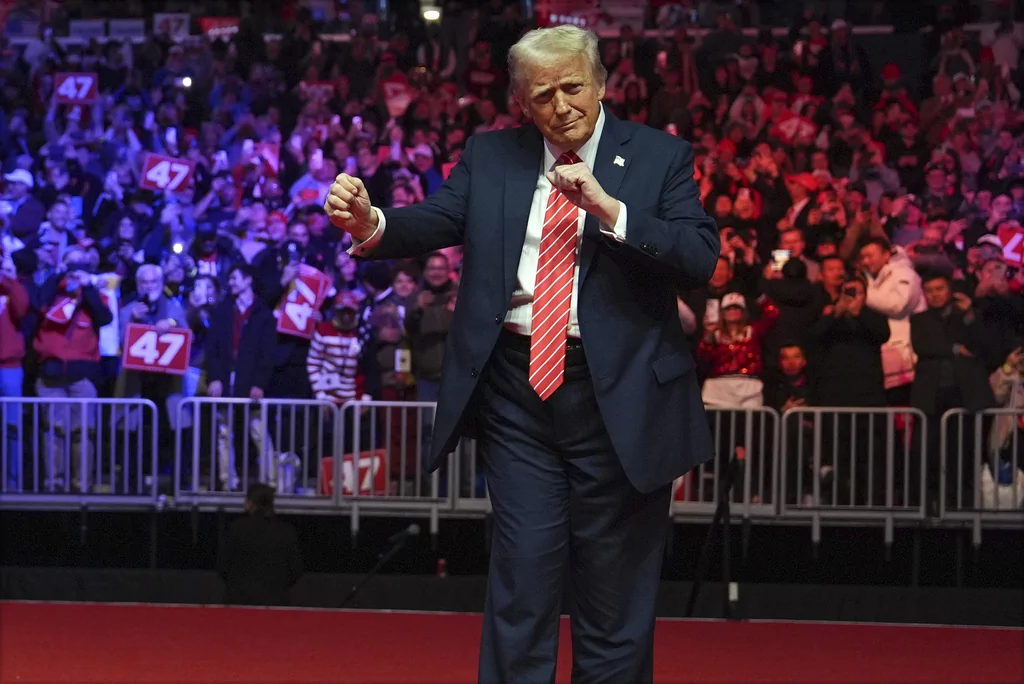
Trump has been exceptionally effective at political performance. His rallies, rallies’ distinctive vocabulary, nicknames for opponents, dramatic entrances, repeated slogans, direct communication with supporters, and use of social media (and that dance!) all contribute to a political style in which the leader himself becomes the central character in the political story. His supporters and opponents alike are frequently encouraged to interpret politics through the drama of Trump himself.
This is one reason Shakespeare is almost prophetic as he offers us such an illuminating lens through which to better understand our present political situation in the United States. Shakespeare’s political plays suggest that political power is partly the power to control the story through which political events are understood.

Yet the comparison has limits, and those limits are important. Trump operates within a constitutional republic with elections, courts, federalism, Congress, an independent press, civil society, and an enormous bureaucratic state. Shakespeare’s tyrants generally inhabit monarchies or quasi-monarchical political worlds. Trump therefore cannot simply be mapped onto Richard III or Macbeth.
That distinction actually makes Greenblatt’s argument more useful. The question isn’t whether Trump is Richard III. The better question is whether Shakespeare helps us recognize recurring mechanisms of political power: resentment, personalization of authority, attacks on institutional constraints, loyalty tests, political spectacle, scapegoating, and the willingness of followers to rationalize conduct that they might reject from an opposing leader.
There is another important difference. Shakespeare’s tyrants ultimately operate in worlds where political violence is frequently decisive. American constitutional government provides considerably more institutional resistance. Recent events demonstrate that resistance: courts have repeatedly blocked or limited Trump administration policies, including a ruling this month concerning expedited deportations to third countries. At the same time, Congress has sometimes expanded presidential authority, as illustrated by the legislation this month granting Trump broad new tariff powers. The result is not a simple story of democratic collapse or institutional triumph. It is a continuing struggle between executive power and the institutions designed to constrain it.
This may ultimately be Greenblatt’s most valuable lesson. Tyrant is not fundamentally a book about identifying villains. It is a book about how political systems respond when ambitious individuals discover that existing restraints can be challenged, circumvented, or reinterpreted. Shakespeare repeatedly asks what happens when people who are supposed to defend institutions decide that their immediate interests are more important than the institutions themselves.
Seen in that light, Trump’s presidency provides a contemporary case study for questions Greenblatt finds in Shakespeare. Ask yourself…
- How much power can a political leader accumulate through personal charisma and mass loyalty?
- How does resentment become a political resource?
- Why do supporters tolerate behavior they might condemn in an opponent?
- When does political opposition become personal enmity?
- What happens when independent institutions are treated as political enemies?
- How much responsibility belongs to the individual leader?
- How much belongs to the people and institutions that make his exercise of power possible?
Shakespeare does not provide simple answers. Nor does Greenblatt. That is precisely whyTyrant remains a good, useful, and necessary read. Its enduring insight is that democracy is threatened not merely when an unusually ambitious person seeks extraordinary power, but when enough other people decide that accommodating that ambition is preferable to defending the ordinary rules that constrain it.
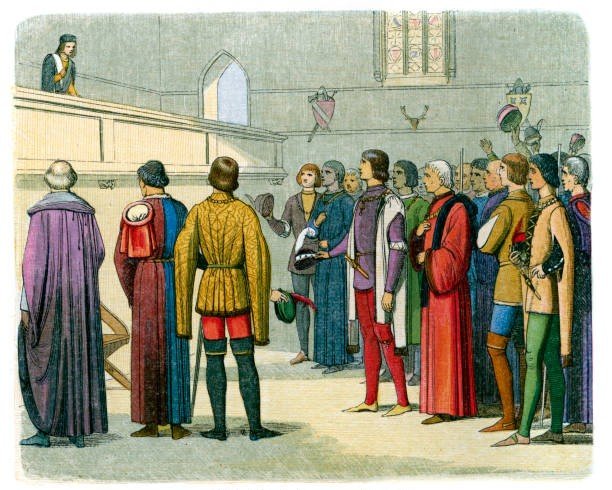
In that sense, the most important character in Greenblatt’s book may not be the tyrant at all. It may be the society that decides what it will tolerate.
