
I had an amazing Pride weekend, probably the best of my adult life. The executive director of my assisted living facility, Brittany, chose “The Wizard of Oz” as our theme, with the tagline “there’s no place like home – Stonewall Gardens” because there is no place like Stonewall Gardens for the LGBTQ+ community, literally. I portrayed Dorothy in the parade, and Gordon portrayed Toto. My best friend Mike, whom I have known longer than anyone on the planet, outside of family, and his amazing wife, Amiee, portrayed the Scarecrow and the Tin Man, and called themselves the “best friends with Dorothy.” Amiee, who is ridiculously talented, made our costumes.

Palm Springs Pride 2026
I was stunned at the cheering for Dorothy along the parade route – people shouting “Dorothy! Dorothy!…” and then when they saw Gordon “OMG!…it’s Toto!” So many people stopped us and asked to take pictures, first one, then, ten, then I lost count after fifty. And they wanted to BE IN the pictures – it slowly dawned on me that I was not just wearing a costume, I represented something deeply profound and meaningful to the LGBTQ+ community. And my little dog Gordon did too!
So today I thought I’d take a deep dive into why The Wizard of Oz is so emotionally meaningful to the LGBTQ+ community and touch on the story behind the phrase “Friend of Dorothy.”

Few films have achieved the extraordinary cultural significance of The Wizard of Oz, released in 1939. For generations, audiences have delighted in its music, colorful characters, memorable dialogue, and timeless message about friendship, courage, and finding one’s way home.
Yet, for the LGBTQ+ community, the film holds a particularly special place. It is so much more than just a beloved Hollywood musical or “color by Technicolor” (my former employer) masterpiece.
It is a story about being different, searching for acceptance, finding one’s chosen family, and discovering a world in which it is possible to feel comfortable being yourself. Its central character, Dorothy Gale, has become an enduring cultural symbol, and the expression “Friend of Dorothy” has become one of the most recognizable coded phrases in gay history.
But to understand this connection, we need to look beyond the yellow brick road and consider the experiences of gay men and women during much of the 20th century, when being openly gay could mean losing one’s job, family, social standing, or even personal safety.
When The Wizard of Oz premiered, homosexuality was heavily stigmatized in American society. Gay men and women often lived in secrecy, concealing their identities to avoid discrimination, harassment, and persecution. Finding other gay people was not always easy, and there were few places where individuals could openly express who they were.
Consequently, members of the emerging gay community developed their own language, cultural references, humor, and methods of recognizing one another. These shared expressions created a sense of belonging in a society that frequently denied them one.
The Wizard of Oz offered something particularly meaningful: a story in which an outsider discovers a world populated by unusual, misunderstood, and wonderfully different characters. Dorothy does not arrive in Oz and find people who resemble everyone back home. Instead, she discovers a world of individuality, imagination, eccentricity, and possibility.
For many gay people, that experience resonated deeply.
Dorothy is herself an outsider. She is a young woman who dreams of something beyond the restrictions of her everyday existence. When she arrives in Oz, she encounters people who are not accepted according to conventional standards. The Scarecrow believes he lacks a brain, the Tin Man believes he lacks a heart, and the Cowardly Lion believes he lacks courage.
Yet Dorothy does not reject them because of their perceived shortcomings. She befriends them, accepts them, and recognizes their worth. This message of acceptance has obvious emotional significance for people who have experienced rejection because of who they are.
One of the most important aspects of the film is Dorothy’s ability to create a family out of people who are not related to her. Her companions are not conventional heroes. They are outsiders who have been made to feel inadequate. Nevertheless, together they become a team, supporting one another through danger and uncertainty.
This idea of chosen family is central to LGBTQ+ history and culture.
For many gay people, particularly those rejected by their families of origin, friendships and relationships within the LGBTQ+ community have provided the love, support, and acceptance that might otherwise have been missing. Dorothy’s journey demonstrates that family is not necessarily determined by blood or social convention. Sometimes family consists of the people who stand beside us, believe in us, and accept us without conditions.
There is also something particularly powerful about Dorothy herself. She is compassionate without being judgmental. She does not demand that her companions become different people before she will accept them. Instead, she values them for who they are. In this sense, Dorothy represents the kind of friend that many LGBTQ+ people have needed throughout their lives: someone who offers unconditional acceptance.
Perhaps no element of the film has become more closely associated with LGBTQ+ culture than Judy Garland’s unforgettable performance of “Over the Rainbow.”
The song expresses a longing for a place beyond the difficulties and limitations of everyday life. Dorothy dreams of a world where troubles disappear and where the impossible becomes possible. For generations of gay men and women, these lyrics have represented the hope of finding a place where they can live openly, love freely, and be accepted without fear.
The rainbow itself has subsequently become one of the most recognizable symbols of LGBTQ+ identity through the rainbow Pride flag.

It is important to recognize that the rainbow flag was created independently by artist and activist Gilbert Baker in 1978, rather than being directly derived from the film. Nevertheless, the emotional association between the rainbow in Garland’s song and the LGBTQ+ struggle for acceptance is unmistakable.
The song speaks to something deeply human: the desire to belong somewhere.
For someone who has spent years feeling different, isolated, or misunderstood, the idea that there might be a place where everything finally makes sense can be profoundly moving. And for those of us living in Palm Springs, and Stonewall Gardens in particular, we have found that place!
It is impossible to discuss the LGBTQ+ relationship with The Wizard of Oz without discussing Judy Garland.
Garland became one of the most beloved entertainers of the 20th century and an enduring gay cultural icon. Her emotional performances, theatrical personality, vulnerability, humor, and extraordinary ability to communicate heartbreak through music resonated particularly strongly with gay audiences.
Many gay men saw something familiar in Garland’s public image. She represented emotional intensity, perseverance, glamour, and the ability to keep going despite personal hardship. Her performances often explored loneliness, disappointment, longing, and the search for happiness. These themes connected with people who understood what it meant to feel excluded or misunderstood.
Garland’s rendition of “Over the Rainbow” became especially significant because it expressed feelings that many gay people found difficult to articulate themselves and the expression “Friend of Dorothy” became a discreet way for gay men to identify themselves and recognize one another.
At a time when openly acknowledging homosexuality could have serious consequences, asking someone whether they were a “Friend of Dorothy” offered a clever alternative to asking whether they were gay. The expression was sufficiently innocent that someone unfamiliar with its meaning would simply assume it referred to a woman named Dorothy. However, someone who understood the reference could recognize the question as a discreet invitation to acknowledge a shared identity.
The expression is generally associated with Dorothy Gale, Judy Garland’s character in The Wizard of Oz, although its precise historical origins remain uncertain. Some accounts suggest that it may instead have referred to the writer Dorothy Parker, who was known for her friendships with gay men and her involvement in fashionable social circles.
The Smithsonian Center for Folklife and Cultural Heritage identifies the connection to Garland’s Dorothy as the more widely accepted explanation while acknowledging that the exact origin of the phrase cannot be established with certainty.
Whatever its precise origin, the expression became an important part of gay folklore. It represented much more than an amusing reference to a Hollywood movie. It was a form of communication, a signal of recognition, and a way of finding companionship in a world where being openly gay was not always safe.
There is even a famous story about American naval investigators in the 80s who reportedly misunderstood the expression and searched for a mysterious woman named Dorothy whom they believed was connected to gay servicemen. The story has become a humorous illustration of just how effective coded language could be.
The expression has survived long beyond the circumstances that made it necessary. Today, “Friends of Dorothy” gatherings are sometimes advertised on cruise ships and in LGBTQ+ social settings, preserving a piece of queer history and celebrating a shared cultural heritage. This year at Stonewall Gardens, we all got T-Shirts with FRIEND OF DOROTHY emblazoned across the front.
Another reason The Wizard of Oz continues to resonate with LGBTQ+ audiences is the symbolism of Dorothy’s journey.
She begins in Kansas, a familiar but restrictive environment. Her life is ordinary, and she dreams of somewhere else. Following her arrival in Oz, she discovers a world that is simultaneously frightening, beautiful, extraordinary, and full of possibilities. Her journey along the yellow brick road can be interpreted as a metaphor for self-discovery.
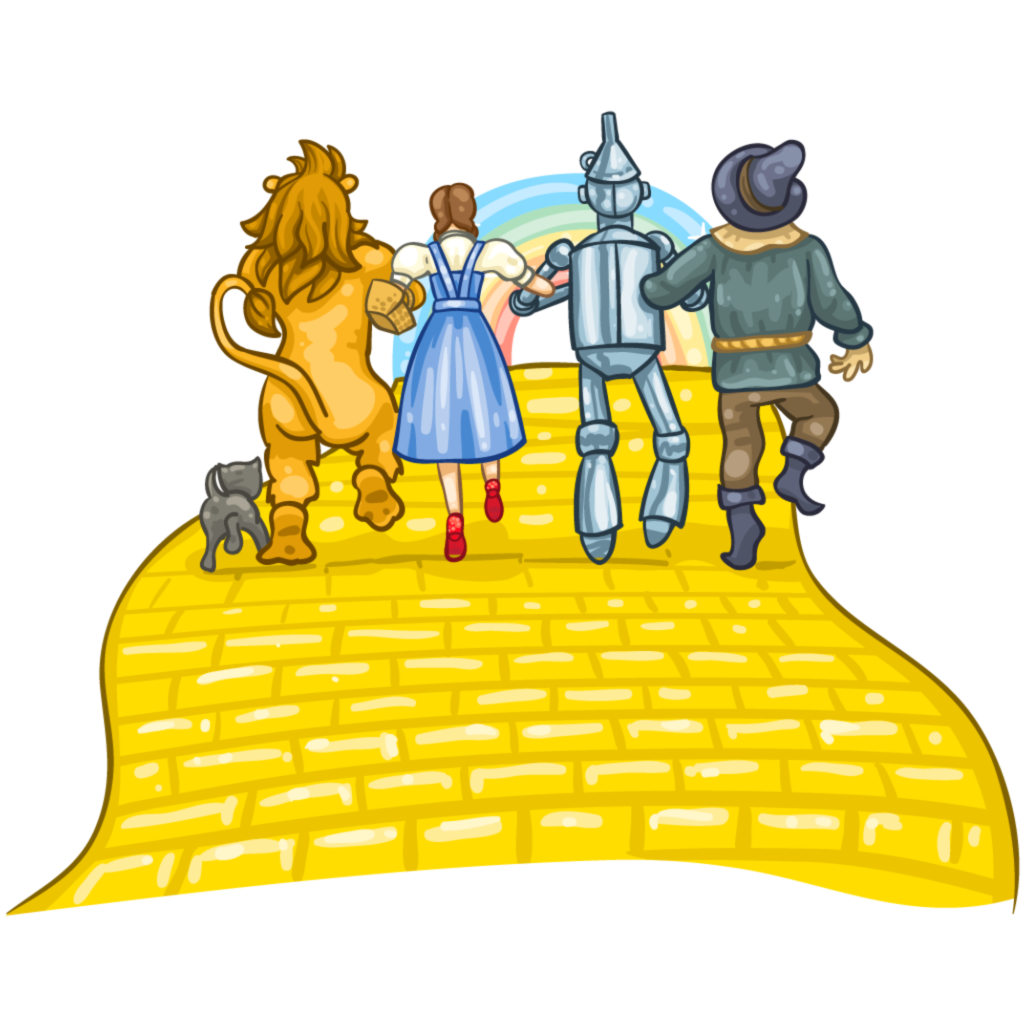
Many LGBTQ+ people experience a similar emotional journey. They may grow up believing that they must conform to the expectations of their families, communities, or society. They may struggle to understand their feelings, question their identity, or fear what will happen if they reveal their true selves.
Eventually, however, many discover that there are other people who understand them and share their experiences. The journey toward self-acceptance can be difficult, but it can also lead to friendship, love, confidence, and a sense of belonging.
The characters Dorothy encounters along the way also offer important lessons. The Scarecrow, Tin Man, and Cowardly Lion believe they lack qualities that they actually possess. Their journey is partly about recognizing their own worth. Similarly, LGBTQ+ people who have been told that something is wrong with them may eventually discover that they were never deficient or broken in the first place.
They simply needed the freedom to be themselves.
Perhaps the most important message in The Wizard of Oz is the meaning of home.
Dorothy spends the entire film trying to return to Kansas. Yet her experiences in Oz transform her. She discovers friendship, courage, loyalty, and the importance of appreciating those who love her. Her final realization that there is no place like home is often understood as a celebration of family and belonging.
For LGBTQ+ people, however, the meaning of home can be more complicated.
For some, home is the family and community in which they were raised. For others, it is the place they eventually create for themselves, surrounded by people who love and accept them.
Sometimes home is not a geographical location at all. It is the feeling of being able to walk into a room without pretending to be someone else. It is being able to hold someone’s hand without fear, speak honestly about one’s life, and know that the people around you accept you. In that sense, the real destination of Dorothy’s journey is not simply Kansas. It is the discovery that love, friendship, and belonging are what make a place feel like home.
Nearly a century after its release, The Wizard of Oz continues to occupy a special place in LGBTQ+ culture. Its significance is not that the filmmakers necessarily intended to create a gay allegory. There is no need to claim that Dorothy was written as an LGBTQ+ character or that every element of the film was deliberately designed to communicate a message about homosexuality.
Its importance and its significance comes from the way generations of LGBTQ+ people have embraced the story and found their own experiences reflected in it.
The film became part of a shared cultural language. Its characters, music, imagery, and humor provided a source of comfort and recognition during decades when open expressions of gay identity were often discouraged or dangerous. It offered a vision of a world where being different could be wonderful rather than shameful. And it gave the gay community a beloved fictional character whose name could be used as a discreet introduction between strangers.
At the end of the day, The Wizard of Oz means so much to the LGBTQ+ community because it is a story about finding acceptance in a world that does not always understand you.
It is about outsiders discovering that they are not alone. It is about friendship becoming family, vulnerability becoming strength, and the courage to follow a path toward a more authentic life.

Palm Springs Pride 2026
Dorothy Gale may have been a fictional girl from Kansas, but she became something much larger in the imagination of generations of gay men and women. Through her, they found a symbol of kindness, loyalty, acceptance, and the possibility of belonging.
Judy Garland’s beautiful voice gave the world “Over the Rainbow,” a song that continues to express the universal longing for a place where dreams can come true. The phrase “Friend of Dorothy” gave gay people a way to recognize one another when recognition was not always safe.
Today, the expression can be used with pride, affection, and a sense of humor. What was once a discreet code has become a celebration of history and community.
Dorothy never asks the Scarecrow, the Tin Man, or the Cowardly Lion to become somebody else before accepting them as friends. She simply welcomes them into her life. And I think that is why The Wizard of Oz is so meaningful to the LGBTQ+ community. We all deserve a place where we belong. We all deserve friends who accept us. And we all deserve to follow our own yellow brick road, wherever it may lead. After all, somewhere over the rainbow, there is a place where everyone can be themselves. And if you understand that feeling, you are probably a Friend of Dorothy or you are friends with Dorothy.
This post is dedicated to Michael & Amiee Klem
I have known Mike since high school, when we carpooled every day and spent hours playing “Marco Polo” with his brothers in their pool. We were roommates in the 90s, dedicated taco connoisseurs, and he co-wrote with me the original code that became the scheduling module of the OpsPro Facility Management System; he and his wife Amiee have raised two sensitive, caring, creative, engaged, enlightened children. Outside my actual family, they are my family.
two “best friends with Dorothy”
and to the amazing Brittany Cabanas
our Executive Director at Stonewall Gardens
Brittany has been ED of Stonewall a little over two years, but her influence and impact has been profound – she took a great place and made it better, with style, grace, humor, and compassion, with an easy manner that belies a deep professionalism and seriousness. Stonewall Gardens is home, and for those of us who live here, Brittany is our homemaker.
