
Have you noticed that when the technology we depend on suddenly starts falling apart, nobody ever seems to have a straight answer? One outage is an inconvenience; two a coincidence; but a whole series of technological failures? And in the middle of it, the NVIDIA CEO scandal. Hang on to your tin foil hats.
Now, I’m not saying the outages, the scandal, the AI arms race, and the increasingly bizarre behavior of the technology industry are connected. I have no proof. That would be speculative crazy-talk, and we’re better than that, aren’t we thoughtful reader? What I am saying is that if you put all these pieces on a table, the table starts looking suspiciously like a conspiracy board in a movie where the protagonist is either about to solve everything or be committed – somewhere nice, with a view of a tree or a stream, and a crafts period making macrame plant hangers.
So here’s my take. May I suggest you plant your tongue firmly in your cheek as I have. There’s not a lot of creative writing in my oeuvre, and the jury is still out on whether this qualifies. Mainly, I just wanted to use the word oeuvre in a sentence.
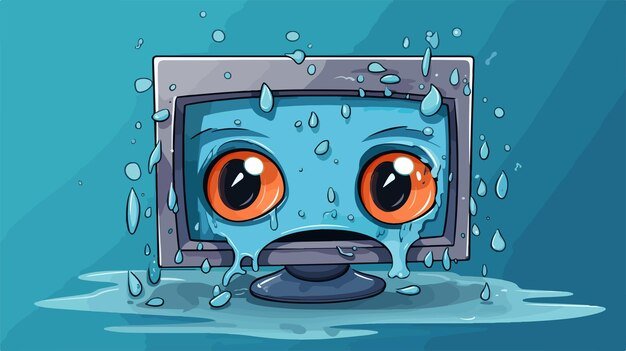
Chapter One: The Internet Has Started Acting Like It Knows Something
First, the email stops working. Then cloud services start coughing up error messages. Banking systems get temperamental. Air traffic systems have problems. Apple services experience disruptions. And suddenly, people are discovering that the modern world is essentially held together by software written by somebody who left the company in 2014 and a server nobody dares reboot.
According to reporting on the November outages, multiple systems experienced disruptions, while officials and cybersecurity experts have not established evidence of a coordinated attack. So, it’s not Iran. The explanations appear to include mundane technical failures, aging infrastructure, software changes, and old bugs. I feel better.
But mundane explanations aren’t nearly as fun as the possibility that somewhere in a windowless room, a shadowy committee is looking at a giant dashboard with a sign over it that says GLOBAL INFRASTRUCTURE: PLEASE DO NOT TOUCH.
And somebody touched it. Possibly several somebodies. Possibly somebody’s AI.
Possibly an intern named Kevin.
Chapter Two: Enter NVIDIA — The Company That Makes the Brains for Artificial Intelligence
Just as the digital world begins having what appears to be a collective nervous breakdown, NVIDIA finds itself dealing with a scandal involving its former CEO, Jensen Huang, allegations surrounding relationships, national-security concerns, and questions about the company’s dealings involving China and advanced AI chips.
Huang resigned on November 12, 2026, and NVIDIA appointed CFO Colette Kress interim CEO. Congressional scrutiny and investigations are reportedly continuing.
Now, obviously, this is not proof that Jensen Huang had anything to do with the outages. But if you’re a conspiracy theorist, or the current president of the United States, proof is such an inconvenient little detail.
You don’t need proof. You need a corkboard, some photographs, a suspicious-looking calendar, red string and pushpins, and a strong belief that everything happening simultaneously must have been planned by somebody with better Wi-Fi than you.
And let’s be honest: the timing is spectacularly weird.
The man at the center of the AI hardware universe suddenly exits the stage amid a scandal, governments start asking questions about chip exports and national security, markets get nervous, and technology services around the world start malfunctioning. If this were a Netflix series, viewers would be screaming at the television: “CHECK THE SERVERS! CHECK THE SERVERS!”
Chapter Three: Follow the Chips, Follow the Money, Follow the Error Message
Here’s where things get interesting.
NVIDIA sells the chips powering the AI revolution. AI companies need enormous computing infrastructure. Cloud providers build data centers. Investors pour money into AI. Companies announce AI initiatives faster than they can explain what the AI actually does. Executives assure everyone that the future is here, while the customer-support chatbot tells you to turn your computer off and back on again.
Meanwhile, the world’s infrastructure is increasingly dependent on interconnected systems, software updates, cloud platforms, AI-generated code, and a handful of companies whose products have become so essential that when something breaks, the rest of us simply stare at our screens like medieval peasants watching a solar eclipse.

So, perhaps the question isn’t whether one person orchestrated the outages, perhaps the question is whether we’ve built a technological house of cards so enormous that nobody knows which card is holding up the roof.
Or perhaps — and this is where the tinfoil hat gets a little snug — somebody has discovered that the easiest way to control a system is not to hack it, but to make everybody dependent on it.
Want to disrupt commerce? You don’t need tanks.
Want to disrupt communication? You don’t need to cut telephone lines.
Want to create panic? You don’t need a dramatic announcement.
Just send a software update.
“We’re experiencing technical difficulties” – The modern equivalent of a government official saying, “Nothing to see here; please continue panicking in an orderly fashion.”
Chapter Four: The AI Revolution Has a PR Problem
For years, technology executives have been telling us AI will transform everything.
It will write our emails, diagnose our illnesses, manage our businesses, replace our jobs, improve productivity, revolutionize education, and presumably eventually make toast. But here’s the funny part.
We’re told AI is becoming smarter than humans, while the systems surrounding it are apparently becoming less capable of keeping Outlook running for an entire afternoon. We have trillion-dollar technology ambitions and infrastructure that occasionally behaves like a teenager who forgot to charge their phone. We’re developing machines capable of reasoning through complex scientific problems while simultaneously being unable to guarantee that the banking application will be available when you need to pay your electric bill.
And when the system fails, the explanation is always some variation of:
- A configuration issue
- A software update
- An unexpected interaction
- A temporary disruption
- A third-party provider
- A problem affecting a limited number of users
“Limited number of users” is particularly amusing when the limited number of users happens to be approximately everybody.
Chapter Five: The Convenient Coincidence Theory
Let’s indulge the conspiracy theorists for a moment.
Imagine — purely hypothetically — that the world is racing toward an AI-powered future that requires massive amounts of computing power, enormous energy consumption, unprecedented data collection, and increasingly centralized technological control.
Imagine that the companies building this future are intertwined with governments, financial markets, defense contractors, cloud providers, and national security agencies.
Imagine that suddenly there are questions about the world’s most important AI chipmaker, its CEO, international intelligence concerns, chip exports, corporate governance, and the stability of the AI investment boom.
And then imagine that, right in the middle of all this, critical technology systems begin experiencing outages.
Would it be suspicious?
Absolutely.
Would it prove a coordinated conspiracy?
Absolutely not.
But it would make for one hell of a documentary narrated by a man standing in front of a wall covered in red string, whispering:
“You see, the outage wasn’t the story. The outage was the distraction from the story about the distraction.”
At this point, even the conspiracy theorist needs a conspiracy theorist to explain the conspiracy.
Chapter Six: Maybe the Real Conspiracy Is That Nobody Is in Charge
Here’s the possibility nobody seems particularly eager to discuss.
What if there isn’t a master plan? What if the actual problem is much more terrifying?
What if we have handed the keys to civilization to an interconnected collection of corporations, software platforms, AI systems, cloud servers, automated processes, and infrastructure that nobody fully understands anymore?
What if the people responsible for keeping everything running are working with systems so complicated that a single overlooked software change can cause cascading failures?
What if corporate executives are racing to implement AI because investors demand it, while engineers are quietly screaming that the infrastructure isn’t ready?
What if the technology industry has spent decades convincing us that innovation means replacing reliable systems with newer systems, faster systems, smarter systems, and systems with more acronyms — without ever stopping to ask whether the old system was actually broken?
Now that would be a conspiracy.
Not one organized by a secret cabal in a subterranean bunker. One organized by quarterly earnings reports, shareholder expectations, competitive pressure, executive bonuses, and the irresistible urge to put AI in absolutely everything.
The Final Theory: Keep Your Eyes Open
So, what should we make of November 2026?
The NVIDIA scandal is serious. The technology outages are serious. The national-security questions are serious. The growing dependence on AI and interconnected digital infrastructure is serious.
But we should resist the temptation to turn suspicious timing into proof of secret coordination. The real facts are troubling enough without inventing villains.
Still, perhaps it’s time we stopped blindly trusting every corporate press release telling us that everything is fine. Perhaps it’s time to ask who controls the infrastructure we depend on, how fragile it really is, who benefits from our increasing dependence on AI, and what happens when the systems we rely on fail simultaneously.
Because apparently, in 2026, we can build artificial intelligence capable of diagnosing medical conditions, writing code, analyzing the universe, doing math, and creating convincing videos of people doing things they never did.
But we can’t always keep email working. And somewhere, deep in the bowels of Silicon Valley, a highly paid executive is probably preparing a statement:
“We are aware of the issue. We apologize for the inconvenience. Our engineers are working diligently to restore service.”
Translation:
We have absolutely no idea what happened, but we have a PowerPoint presentation explaining why it wasn’t our fault.
And the conspiracy theorist? He’s already bought another roll of red string.
Because when the internet goes down, the chips are under scrutiny, the CEO is in the headlines, and the entire technological ecosystem starts wobbling, you don’t just ask what happened.
You ask:
Who benefits?

And then you turn off your laptop, and wonder whether it is staring back at you.
